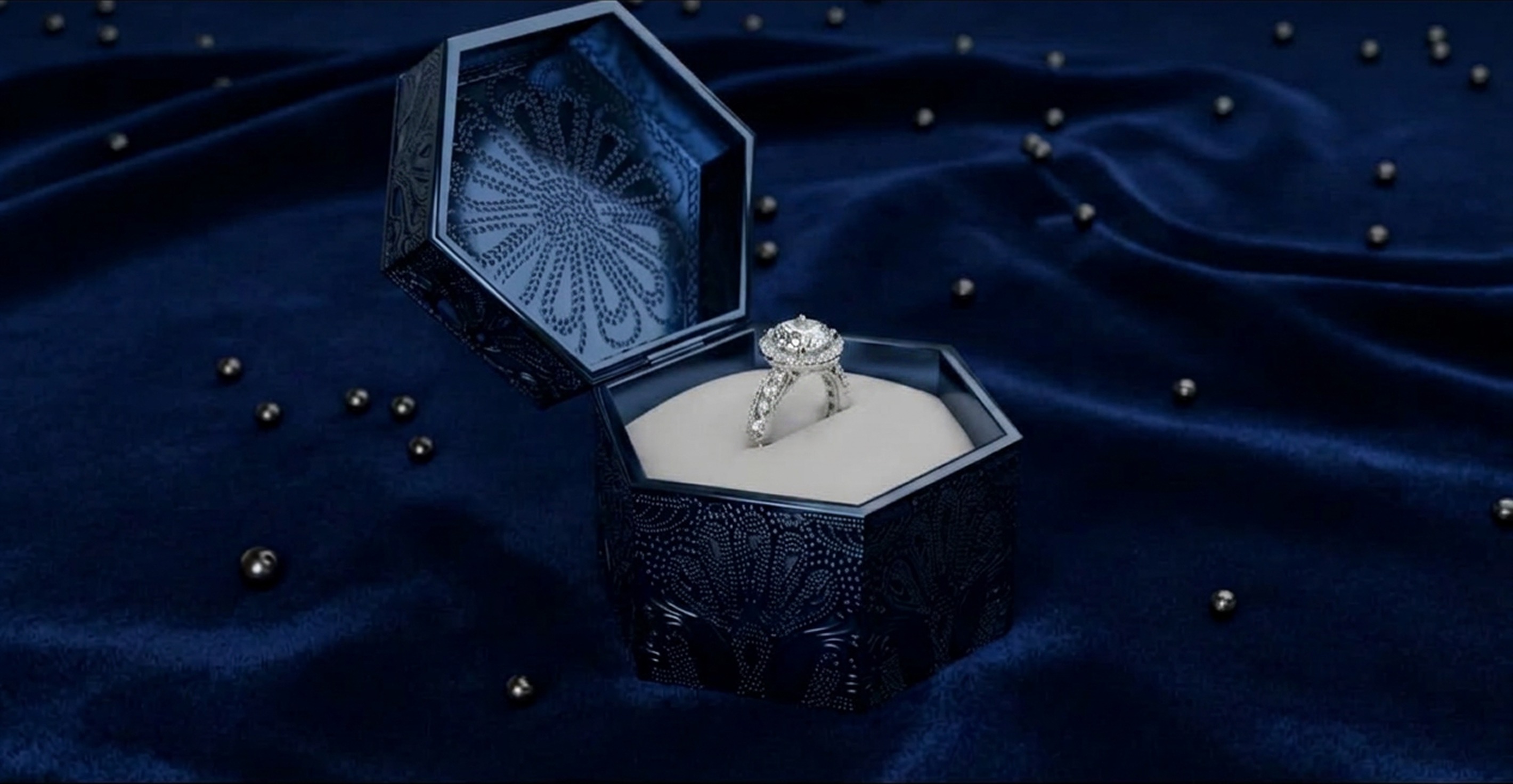
Strategic 3D Jewelry Rendering Pipeline Drove 300x Faster Output and 2,500+ 4K Renders for US Luxury Bespoke Jewelry Studio
Footwear Ecommerce
The Client

A High-End US Jewelry Studio Creating Heirloom-Quality Pieces

The client is a US-based jewelry studio with more than seventeen years of experience crafting high-end jewelry. Its catalog covers bespoke rings, wedding bands, statement pieces, and heirloom redesigns built from rare gemstones, diamonds, gold, and platinum. The studio delivers white-glove service to a global clientele across the luxury market.
Project Requirements

Photorealistic 4K Renders Spanning the Studio's Full Jewelry Catalog

The client required renders that aligned with their high-end brand image and enhanced the online buying experience. Every 3D jewelry rendering output had to hold up across the catalog. Scope: 2,000+ photorealistic 4K images across 100+ SKUs, timed to product launch timelines.

    • High-Quality 4K Renders: The client supplied 3D CAD files in IGS format and requested photorealistic 4K renderings. Each had to showcase true diamond brilliance, realistic metal surfaces, and accurate shaders — diamond dispersion, caustics, and surface microdetails.
    • Multiple Angles for Visualization: At least 3 to 4 perspectives per product — hero angles, close-up side shots, and angled side views — to highlight clarity, structure, and setting details for the eCommerce catalog.
    • Visual Consistency Across the Catalog: Uniform lighting, color calibration, diamond brilliance, and metal tones across every render. That consistency delivered the cohesive, premium experience the brand's luxury aesthetic demanded.
    • Faster and Scalable Workflow: A scalable, repeatable, and faster rendering solution capable of keeping pace with high-demand custom jewelry production while holding technical accuracy and visual standards.
    • Accurate Representation of Jewelry Categories: Renders across every category — engagement rings, wedding bands, bracelets, pendants, necklaces, everyday rings, cufflinks, earrings, and stud earrings. Each had to capture the brilliance and craftsmanship of the piece.
clipping path
Before clipping path services After clipping path services
Project Challenges

Resolving Geometry, Material, and Render Speed Issues in 3D Jewelry Rendering

Converting the studio's design files into photorealistic production renders surfaced technical issues that a generic rendering approach could not solve. Each challenge affected geometry, color calibration, or throughput, and several affected all three at once. If left unaddressed, any of these issues would have compromised the photorealism required of a luxury catalog.

CAD-to-Mesh Conversion Losses

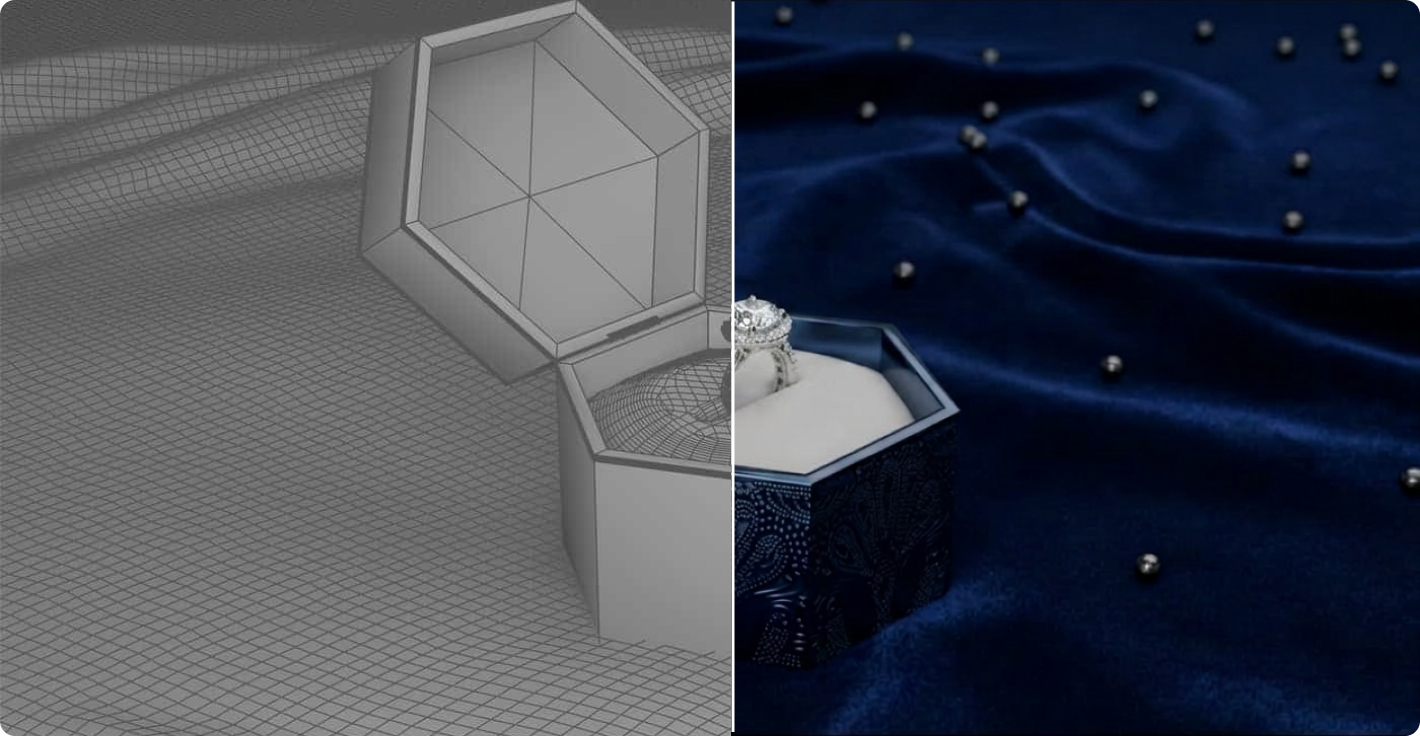
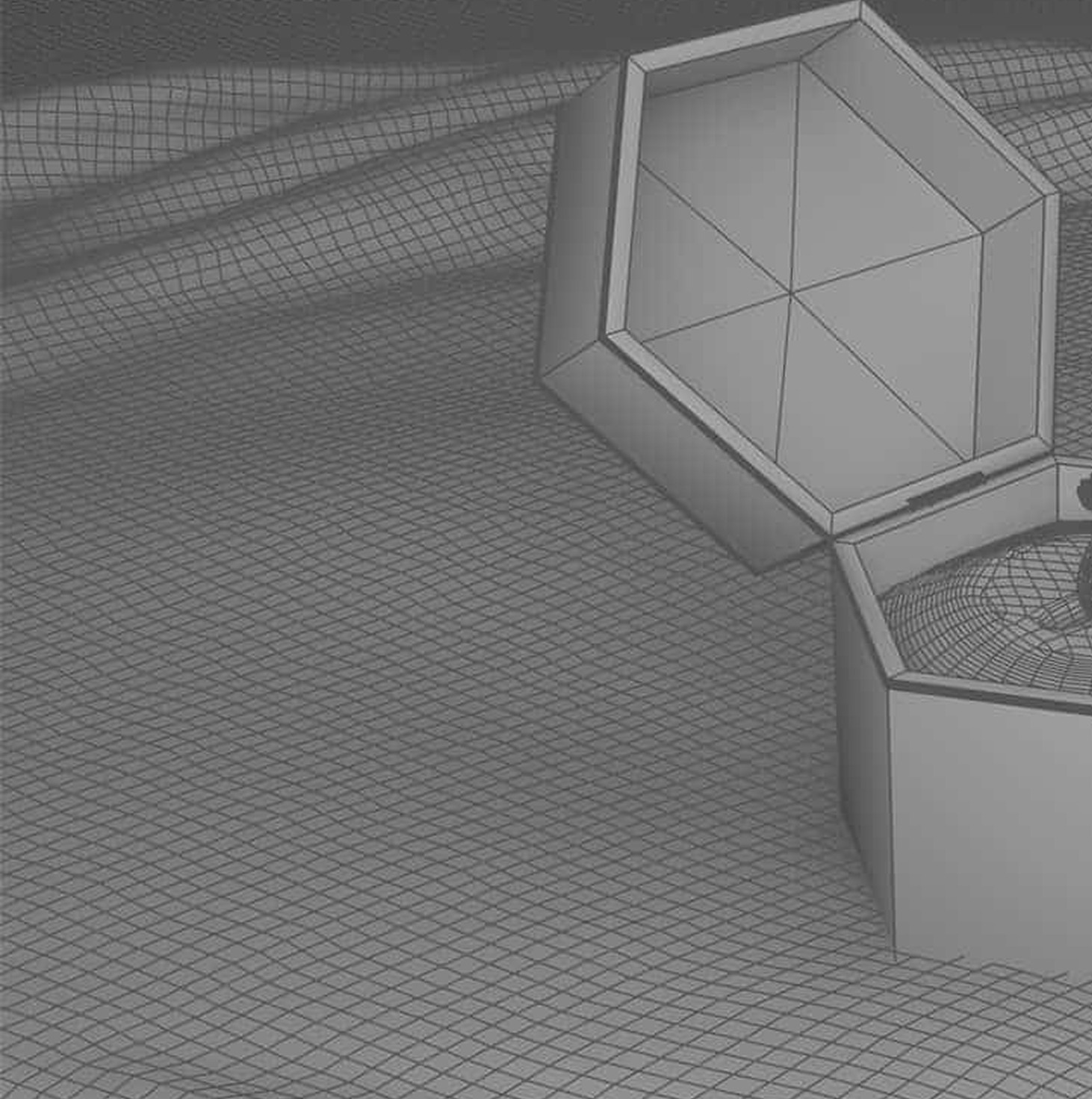
The client supplied IGS files, a NURBS-based geometry format not suitable for photorealistic rendering. Converting these mathematical surfaces into polygonal mesh models introduced broken geometry, missing surfaces, and inaccurate design details.

Mesh Inaccuracies Affecting Refraction and Sparkle

Several supplied mesh files contained incorrect gemstone cuts and misaligned facets, resulting in unrealistic refraction and sparkle. The inherited diamond geometry was flawed at the table, crown height, and pavilion angle levels, compromising render photorealism.

Coordinate Alignment Across Software

Moving assets through multiple software tools demanded precise XYZ coordinate alignment, object pivot points, and 3D cursor positions. Misalignment causes objects to shift in 3D space between platforms, producing broken reflections and unnatural light falloff.

Jewelry Metal Color Accuracy

Metals across 14K, 18K, 22K, and 24K yellow gold, white gold, and platinum each require precise spectral color calibration. Even slight deviations push the final render toward a cheap or inconsistent appearance — and unnecessary revision loops.

Camera Angle Selection Risk

The studio's preference for luxury-standard camera angles introduced a feedback loop risk. These angles vary widely across jewelry categories. Without upfront standardization, clients often reject angles after rendering, driving rework.

Rendering Speed Limitations

Traditional rendering engines — Cycles, V-Ray, Arnold, Octane — take 25-40 minutes per render. Against 2,000+ image renders at 4K resolution, that baseline would stretch production across weeks or months.

Custom Shader Development

The client's Cabochon gemstone had no existing shader or PBR material in any library. A custom shader/3D material had to be built from scratch to capture the gemstone's translucency, dome reflection, and internal color gradients.

Our Solution

A Tailored Workflow Built for High-Quality Jewelry Renders at Scale

workflow for our 3D jewelry rendering services, with process innovation at every stage. Each step of the pipeline — from CAD conversion through immersive-ready delivery — was designed to remove a specific bottleneck.

The result: a scalable workflow that held visual standards steady across the full catalog.

Phase 1: Mesh & Geometry Foundation

  1. CAD-to-Mesh Conversion Pipeline: The client's IGS CAD files were processed through a custom 5-tool conversion pipeline to produce accurate polygonal mesh models. Every mesh carried clean topology, proper normals, accurate edge loops, and optimized polygon counts — design accuracy uncompromised. GLB was our format of choice for its lightweight structure and cross-tool, cross-rendering-engine compatibility.
  2. Mesh Cleanup, Diamond Accuracy & Geometry Corrections: Post-conversion cleanup caught and fixed geometry artifacts — missing faces, intersecting surfaces, inaccurate gemstone seating. Gemstones were rebuilt to real-world cuts (oval, cushion, round brilliant) with correct facet alignment for optimal brilliance and dispersion, and broken or inaccurate stones were swapped for super-accurate diamond and gemstone geometries. Pavilion depth, crown height, table proportions, and facet alignment — the four parameters governing natural brilliance, fire, and dispersion in luxury jewelry visualization — were all restored.

Phase 2: Production Pipeline

  1. Product Positioning, Origin Setup & Coordinate Calibration: Coordinate alignment, pivot points, and 3D cursor positions were standardized across all tools. The result: accurate light falloff, shadow placement, and reflection accuracy, with every asset correctly aligned in the 3D world.
  2. Material Development & Design Board Workflow: A Design Board presented the client with 8+ metal (gold, platinum) tone variants, gemstone materials, and low-res previews — a single forum for confirming exact tones. Metal and gemstone shades were locked at the preview stage before high-resolution rendering and large-scale production began, eliminating back-and-forth revisions entirely.
  3. Camera Angles, Competitor Research & Pre-Approval: Camera angles and lighting setups were informed by research into top luxury jewelry brands. Category-specific camera angles were proposed to showcase intricate details and align with luxury jewelry standards, with pre-approvals secured on camera angles, lighting templates, and compositions before production — no mid-run delays.
  4. WebGL Rendering Pipeline & Hyper-Efficient Output: Digital 3D rendering acted as a "virtual camera," calculating how light interacts with 3D models to transform technical data into photorealistic 4K images. At the core sat a custom WebGL rendering engine pipeline built for batch processing, hitting 4K photoreal output in 4 seconds per image — 300 times faster than the 25-40 minute industry standard. Custom HDRIs (environment images reflected by the jewelry metals) and lighting profiles drove enhanced reflections, sparkle, refraction, and metal realism. Per-SKU configuration files covered metal variations, gemstone variations, camera presets, and lighting profiles, enabling easy scalability and batch rendering.
  5. Creation of Custom Gemstone Shader: The non-primary tone gemstone had no existing shader or PBR material, so a bespoke shader was authored in Adobe Substance Painter with custom rendering tools. Custom texture maps and tuned optical parameters replicated the natural gemstone's unique translucency, dome reflection, and internal color gradients.
  6. Delivering Immersive-Ready Renders: Final delivery was in a standardized GLB format, with optimized geometry and precise pivot-point calibration. The collection landed natively compatible with 360-degree 3D viewers, AR (Augmented Reality), and virtual showrooms — giving the client immediate flexibility for future interactive marketing strategies.
Project Outcomes

Delivered 300x Faster 3D Jewelry Visualization at Production Scale

The project reset what a high-volume luxury catalog could produce. Rendering compressed from months to hours while keeping the studio's go-to-market window intact.

Reduced turnaround time

2,500+ 3D renders

rendered in 4K resolution across the full jewelry catalog.

SKUs

100+ SKUs

covered with a metal finish and gemstone variations on every piece.

business day

45+ business days

recovered through the custom WebGL rendering pipeline — significant cost savings and a reduced go-to-market lead time that secured first-mover advantage.

Facing Challenges in Scaling Your 3D Jewelry Rendering Pipeline?

Let our experts address gaps in CAD-to-mesh conversion, material calibration, camera standardization, and rendering throughput.

Get started with a free rendering audit. Reach out at info@picsmatic.com.

Free Sample